What It’s Like to Have a Surgical Screw Removed

Before my wrist surgery, I did research.  The medical journal articles all said that standard protocol for scapholunate repair was to leave in surgical screws no more than 12 months.  My surgeon said, “We’ll see.  Sometimes we just leave it in there.”  A long discussion ensued.  Post-surgery, the conversation continued.  At each post-surgery follow-up, we discussed the screw.  X-rays continued to show that the screw was not moving – it was stable.  The wrist healed well.

However, about 18 months later the wrist began to ache.  There was pain with basic actions.  The wrist would throb, and I would ice it in the evenings to get some relief.  At the next follow-up, x-rays showed that the screw was loose and had possibly migrated a bit, so that it was possibly impinging on an adjacent bone/nerve.

The surgeon went from “We’ll leave it alone as long as it’s not causing problems” at previous visits to “That’s it!  It’s coming out.”  “How soon do you want to schedule the surgery?” I asked, thinking he’d say “No rush, what would work with your schedule?” and we’d find a date in the next six months.  “Tomorrow?” he joked, following up with “As soon as possible – within the next month.”

Ok, it hurts, but what’s the hurry, doc?”  “Well, besides the pain it’s causing, it would be really bad if you fell – bent or broken screws are bad.”  So I had to ask, “Yeah, how *do* you remove a bent screw?  Do you have to cut it into sections and remove each section separately?”  To which he replied, “If it’s bad enough, sometimes we just have to leave it, because we can’t get it back out.”  Yikes!

Needless to say, I was very cautious leading up to the surgery.  Fortunately, I avoided damaging the screw.

Surgery went very smoothly, although the surgeon threw me a curveball in pre-op.  He suddenly informed me that if the hole left by the screw was larger than desirable, he’d like to fill it with cadaver bone.  He knows I research every action thoroughly, so I was a bit stressed by this last-minute information, which would lead to a less-informed decision than I prefer to make.

Although I have no problem with the use of cadaver bone in general, I decided not to exercise that option for myself because my body is hypersensitive and overreacts to substances most people can tolerate, like fragrances and chemicals.

When I reminded my surgeon of that, he told me that another option would be to use my own radius bone as a donor by shaving some bone from the radius and inserting it into the hole in my scaphoid and lunate bones.  This sounded like a much better option for me, given that I cannot even tolerate the adhesive on band-aids on the outside of my body.  So that is what he did.

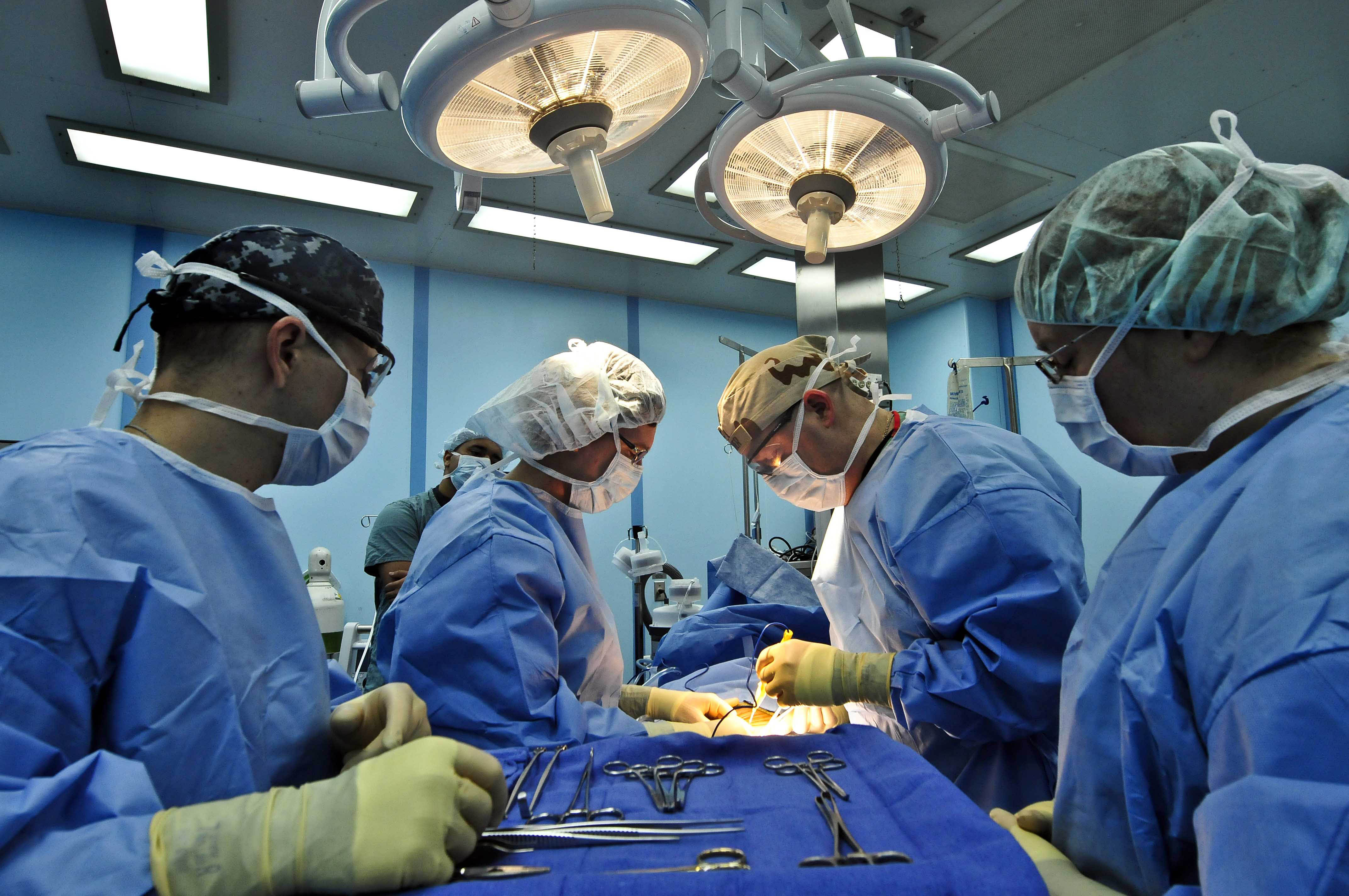
Hardware removal is typically a quick and easy procedure.  Since all they were doing was removing a screw from my wrist, the anesthesiologist used a lighter anesthesia, and did not do a nerve block at my neck.  He did use some type of local anesthesia at the site, because my thumb was numb for about 12 hours afterward.

My orthopedic surgeon removed the screw arthroscopically.  He did not like the size of the hole left by the screw, so he removed small pieces of bone from my radius and packed them into the hole.  Then he stitched the incision closed and my wrist was wrapped in a soft cast.

I wore the cast for two weeks.  My arm itched like crazy*, so I kept the arm iced for two weeks, which gave me relief from itching and from pain.  [I used a re-useable cold pack, which we placed in a zippered pillowcase to protect my skin and to keep the ice pack from sliding around as much.]

[*I was probably having an allergic reaction to the soft cast.  If I had experienced additional allergy symptoms beyond itching, I would have called my doctor’s office and informed them of the problem and asked about possible alternatives to the soft cast.]

I did not experience much pain.  There was a dull ache for the first few days, and my wrist would hurt as it became fatigued.  I treated the pain with Tylenol and frequent icing.  I also kept my wrist elevated above my heart and propped my wrist up on pillows whenever possible.  I also slept with my arm in a sling, as ordered, and propped up on a pillow.

So, basically, the formula RICE [Rest, Ice, Compression, Elevation] worked well for me.  [The soft cast partially consisted of compression bandages.]

Two weeks post-surgery, I went for a follow-up visit, at which time they removed the cast and the stitches.  The doctor applied a few steri-strips over the incision site and gave me a wrist splint to wear for another 2-4 weeks, including while I slept.

They also took x-rays to see how the healing was going.  I could see the hole in my bones where the screw had been, the metal clip the surgeon used to reattach my scapholunate ligament in my first wrist surgery, and the area where bone was shaved from my radius.

My surgeon had asked if I wanted to keep the screw [he knew I would].  Of course I said yes.  So after the screw was removed it was sterilized, and they returned it to me at the two-week follow-up:

My surgical screw (a.k.a., the loose screw)

Unlike my first wrist surgery, after this surgery I had a lot of bruising and discoloration.  Initially, my thumb turned dark purple, almost black.  I did the press test (a.k.a. capillary nail refill test) on my thumb nail and the blood flow was fine, so I just kept a careful eye on it for a few days.  Fortunately, after a few days my thumb stopped getting darker, and started turning the green of a healing bruise.

Once my cast was removed I could see that my hand and wrist were bruised too.  The surgeon said the bruising was mostly due to having shaved bone from my radius.  If I had chosen to use cadaver bone, I probably would have had much less bruising and less pain.

At the two-week check-up I was cleared to drive and to get the incision area wet, but I was given a weight-lifting restriction of 2 pounds or less.

Six weeks later (eight weeks post-surgery) I had another follow-up with my surgeon.  He (and  I) were very happy with how the incision was healing.  X-rays were taken again, and we could see that the bone graft was filling in the hole left by the removal of the screw.  However, I had noticed that my wrist and hand were weak and that I was having tendon pain in my anterior (palm-side) wrist and in my lateral (outside) elbow.  The surgeon confirmed that my tennis elbow had returned, but didn’t have an explanation for why the inside of my wrist would be hurting.  He recommended that I do some gentle exercises at home and give it more time to heal.  He also increased my weight-bearing limit to 5 pounds.

Although I had stopped wearing the wrist splint approximately 5 weeks after surgery, I decided to start wearing it again in order to give the wrist more support and more time to heal.  After about a week (nine weeks post-surgery) I didn’t feel like I needed it anymore, but wearing it for that week had taken strain off the sore tendons and they were feeling much better.

My final follow-up with my orthopedic surgeon was four weeks later (twelve weeks post-surgery).  The final set of x-rays looked good, and I was released from his care.

For those of you who are keeping score, the injury occurred in early 2014.  After four plus years and five surgeries to repair the damage (and remove my loose screw 😉 ), this appears to be the conclusion of that episode.

[Unless the tennis elbow requires another surgical correction.  My surgeon previously performed a tennis elbow release (a.k.a. lateral epicondyle release), but when I told him the elbow was symptomatic again, he informed me that sometimes scar tissue can form post-surgery and cause restriction, pain, or both at the surgical site.  Before I would have another surgery, I would try a cortisone injection and more physical therapy.]

The last surgery was the easiest one from which to recover, but I am glad to have that all behind me.  [Have you ever tried to blow your nose with only one hand?]

As I have already said several times, BEWARE SLIP-AND-FALL INJURIES!

BONUS: Anything you ever wanted to know about orthopedic hardware

2019 WOTY (Word of the Year): Freefall

Longtime readers will know that I don’t really “do” New Year’s resolutions. And I don’t pick a word of the year (WOTY) most years either. But it feels appropriate to have a WOTY this year because I am experiencing major life changes.

For most of my adult life I have had the goal of earning a PhD. I always expected that I would complete this degree and then work as a professor and/or researcher for the Department of Defense (DoD). And I made it all the way to the last step: I completed all of the coursework, wrote and defended a master’s thesis, passed the comprehensive exam, and completed two prestigious fellowships. I have been a doctoral candidate (also known as all-but-dissertation [ABD]) for four-and-a-half years. And that entire time I have been too ill and/or broken to be able to work on the dissertation.

Each time there was some improvement in my health, I would attempt to work on my dissertation. And, each time, my health would experience a significant setback. Determined as I am to complete this goal, conditioned as I am to never quit, I can’t keep ignoring this pattern. In the back of my mind, I hear Dr. Phil saying:

And I have to admit, it *isn’t* working. And, as the saying goes, “The definition of insanity is doing the same thing over and over again and expecting different results.”

The truth is, sometimes it doesn’t matter how determined you are or how hard you’ve worked – sometimes you just can’t reach the finish line.

This is a harsh reality when you are chronically ill – sometimes you just can’t will your dreams into reality because your body betrays you, and no matter how badly you want something or how hard you try, your body just won’t do what you want or need it to do.

So it’s time to cut my losses and move on.

Which means that I am now in freefall. By letting go of the end of the rope to which I’ve been hanging for so many years, I find myself falling into the unknown. Letting go of the goal to which I’ve been fiercely holding tight for so many years is scary, even though I know that I have to let go in order to make room for something new.

So I’m leaping off a cliff, freefalling into the unknown future with hands that are bloody from having held on so tightly to this dream for so many years, bloody from having fought so long not to have it pried from my grip.

If I’m honest, the future is always unknown. That’s just hard to admit for those of us who like to pretend that we can control the future by making plans and following them. But becoming chronically ill has forced me to confront my illusions of control. When you are forced to accept that you can’t control your own body, you realize you don’t have control of much else either.

Therefore, 2019 will be a year of transition, a year of major life changes for me. We’ve moved across the country, to a fixer-upper, so renovations will begin again (after three years of renovating the house we thought was our retirement home in the Rockies). I am surrendering the dream that I have held for decades, and which I have been actively pursuing for the past eight-and-a-half years. I will continue to pursue diagnoses for my chronic illnesses in 2019. And Spousal Unit and I will have to figure out what comes next – how do we want to live our lives here and now. Here, in this new place, and now that we have surrendered the dreams that led us to Colorado. Now that our lives are shaped by my illnesses and disability.

But first, I’m going to grieve the death of this dream that I have pursued for so long. I’m going to grieve the change in my physical status from able-bodied to disabled and chronically ill. I’m going to sit with my feelings and fully feel them, rather than running away from them or ignoring them, as I have done for most of my life. And then I will work on acceptance – acceptance of my new reality, acceptance of “what is and what can never be.”

I know that I have to let go of this dream in order to make room for whatever is next. I’ve been stuck spinning my wheels for years. It’s time to make a change, time to let go and move on.

But I’ve never quit before, you see, so it’s going to take some time for me to process this.

And then I think I’ll have a wake for my PhD. It has consumed a large portion of my life, and I think a commemoration is in order. I will grieve, and I will honor its passing, and then I will rise from the ashes of the life I thought I would have and walk into my alternate future.

Third Blogiversary: One Sick Vet

Does my blogiversary still count if I didn’t blog at all for a large percentage of the past year? Sorry for the long absence – I always wonder what happened when my favorite bloggers just disappear with no explanation and now I’ve gone and done the same thing myself. Mea culpa.

So, what happened? I continued to get more ill, more incapacitated the longer I lived in the Rockies – even though I had successfully lived there previously. This time my body simply was.not.having.it.

Despite my best efforts, I was unable to obtain a diagnosis, let alone a successful treatment. I reached the point where I was no longer living – I was merely existing. I spent my days online if I had enough mental capacity or watching TV if I did not. I only left the house for doctor’s appointments, and I couldn’t tolerate most visitors to my house due to my allergies.

After years of struggling to get better, I finally accepted that I probably never will. I am chronically ill and disabled, and my life has radically changed. This is my “new normal.”

And so I asked myself, “Assuming that I will not be able to complete my academic degree and that I may never be able to work outside the home again, how do I want to live what is left of my life?” I heard my sister-in-law’s voice, asking the question she often asks her children: “What would make your heart happy?”

And although my answer was frequently, “I want to finish my degree and complete the plans I made,” eventually a different dream emerged. If I could no longer pursue my previous goals, then I wanted to skip ahead to the dreams I had for “someday.” Eventually – once I had worked long enough, once I had done enough to contribute to society – I wanted to live someplace warm, someplace where I could swim and snorkel and scuba dive whenever I wanted.

And so Spousal Unit and I have uprooted our lives once again. We have sold our dream home in the Rockies and moved to the beach.

I plan to blog about all of this in 2019: coming to terms with a chronic illness; moving while chronically ill; survival minimalism; personal finance and chronic illness; and learning to live life on my own terms and according to my own definition of success. And, of course, I will continue to blog about heath and wellness.

Thanks for reading my blog. Thanks for coming along on my journey. I look forward to what 2019 will bring.

Getting Really Real About Chronic Debilitating Illness: Sometimes We Need Help

I’ve been reading a new (to me) blog this week, written by a person with multiple chronic debilitating conditions.

This post, in particular, struck a chord.

So few people understand how isolating a chronic illness or other disability can be – especially if it includes severe allergic reactions to “everyday” substances like fragrances, chemicals, dust, dander, mold, pollen, or food.

As a disabled person’s world shrinks, their social network, family, and close friends becomes ever more important, if they are so fortunate as to have any or all of these.  In the author’s words:

Having our basic needs met makes the difference between living well with pain and illness and merely existing.

I am very grateful for all that Spousal Unit does for me, even on the days when I feel too awful to express my gratitude or affection.

I still fight, many days, to live well rather than merely existing.  Without Spousal Unit’s care and assistance, I’m not sure how long I would even continue to exist – basic needs like grocery shopping, cooking, cleaning, or getting to doctor’s appointments are often just too difficult to accomplish by myself.

Who do you know that might be isolated?  Falling through the cracks?  Barely keeping their head above water, or a roof over their head?  How can you help?

A text, an email, a call, a card, a visit – all mean the world to someone who’s “shut in” and isolated.

A ride to the grocery store, or to a doctor’s appointment, could mean the difference between living well and not eating nutritious meals or not getting necessary healthcare.

Offer to pick up something from the drug store, or grocery store, or a restaurant for them.  Or give them a gift card for Wal-Mart or Amazon or someone else who delivers goods they need to their door.

It’s too easy to become too busy and not make the time to help others.  You can’t do it all, but try to find ways to help someone else who can barely do anything.  It might mean the difference to them between living well, merely existing, or ceasing to exist at all.

P.S.  Sometimes non-disabled folks need love too.

Ode to a Tie-Dyed Rory the Raccoon T-Shirt

Rory, in all his unhinged glory

Once upon a time, there was a deranged-looking (or Furiously Happy) ethically-taxidermied raccoon with jazz hands named Rory.  (The raccoon was named Rory, not the jazz hands because that would just be weird – plus, each hand would require its own name, no?)

Rory became a book cover, and he became one of the mascots of The Bloggess and her tribe.  Rory is our mascot because he is, in The Bloggess’s own words, “broken in just the right way.”  His image now appears in many guises, including buttons, keychains, and apparel.

Several months ago, I purchased various items of Rory Wear to bolster my morale.  I am a chronically and debilitatingly ill veteran who is desperately fighting to complete graduate school, and I thought Rory Wear would lift my spirits and encourage me to continue the battle.  (Spoiler alert: It does.)

My particular favorite is the tie-dyed Rory t-shirt.  (Some of you will be familiar with the tie-dyed Rory the Raccoon t-shirt, thanks to this post.)

This shirt is like a ray of sunshine blasting through the darkness.  Even if you feel like this, when you get a glimpse of Rory (with tie-dye) in a mirror you will feel a jolt of amusement.  You will remember (I hope) that #DepressionLies and that you don’t have to be miserable, even if your life truly sucks (right now).

Another benefit of wearing a tie-dyed Rory t-shirt I just realized today, as I was dragging my broken and decaying body to the VA clinic, and it is this: no matter how bad you think you may look, you will probably not look as deranged as Rory; therefore, you cannot help but look better in comparison.

Also, the tie-dye is great body shape camouflage. 😀

So I rock my tie-dyed Rory the Raccoon t-shirt to remind myself to look for the good, look for the amusing, look for the joy, and fight to be #FuriouslyHappy.

(If nothing else, you’ll give other people something to talk about – “Dude, What is *up* with that shirt?”)

NOTE: Although it may sound as if I have received complimentary Rory Wear or been compensated in some way, I assure you that I paid for all of my Rory apparel out of my own pocket, no one asked me to endorse it, and The Bloggess is blissfully unaware of my blog and its contents.  However, I *absolutely* endorse these products!

If you want your very own Rory apparel, you can find it here.  This is not an affiliate link, and I will receive nothing.  All proceeds go to support the lovely and talented Bloggess, Ms. Jenny Lawson.

NOTE: For those of you who do not know yet, Furiously Happy is Jenny Lawson’s wonderful book about dealing with mental and physical illnesses and choosing to find happiness.  You can read more about it here.

NOTE: There are approximately 160 different styles of shirts.  Read the details for whichever shirt interests you.  The tie-dye shirt is 100% cotton, and does not irritate my allergies.  However, many of the shirts contain synthetic materials.  YMMV.


Buyer Beware: Did You Know Bad Doctors Can Skip From State to State and Keep Practicing Even If Their License Has Been Restricted in Another State?

Research your doctors carefully.  Several years ago I refused care from a surgeon (at a military clinic) who had a similar story to this doctor – malpractice suits and complaints in several states, and medical board action in at least one state, but licensed to practice in his current state.

When I expressed alarm about his long history of dissatisfied/disabled patients, other physicians at the military clinic told me that was in the past (IOW, they knew about it, but did not care.)

What tripped my alarms about that surgeon? He refused to stop hurting me during a pre-surgery exam, even though I specifically and loudly said “STOP! You’re hurting me!”

He also told me that if my surgical site developed internal scar tissue, it was his practice to anesthetize patients and then yank violently on the limb to tear apart the scar tissue in the joint.  In response to which, I thought”YOU ADMIT THAT???  No, thank you!  Brute force and ignorance is NOT my preferred approach!”

BOTTOM LINE: If I can’t trust my doctor or surgical team when I’m awake and able to advocate for myself, there is NO WAY I would trust them when I’m unconscious. Trust your instincts, and do your homework. You’re the one who lives (or dies) with the consequences.

NOTE: For information on avoidance of internal scar tissue and standard practices for internal scar tissue removal see this article,  this article, or this DIY video/article [I am not endorsing this product].

You will note in the second article that “manipulation under anesthesia” is a valid technique for dealing with internal scar tissue, but only AFTER gentler, non-invasive techniques have been exhausted.


How to Read an X-ray (or at least understand what the doctor is saying about it)

Prior to this most recent surgery, the ortho said something I didn’t quite understand during my last appointment.  He looked at the new x-rays and said that the surgical screw in my wrist was loose, and that the lucent areas on the x-rays were an indication of that.  I didn’t really know what that meant, so I went searching on the internet, and I found this webpage that explains how to read an x-ray.

Your doctor might not actually show you your x-rays (mine always does), but, if you read the webpage, you should have a better understanding of what your doctor is telling you about your x-rays.

This part explains the basics pretty well, I think:

The first principle behind knowing how to read an x-ray is knowing how different parts of the body will absorb an x-ray. This absorption falls into three basic categories and they are:

  • Boneappears light grey or white because it absorbs a high percentage of the x-ray (metal is pure white)
  • Tissueappears a greyish color because it absorbs some but not a majority of the x-ray (water or fat, for example)
  • Airappears black because it absorbs a very low percentage of the x-ray (gas, for example)” – https://www.npinstitute.com/how-to-read-x-rays-s/1860.htm 

Unfortunately, this webpage doesn’t talk about lucency.  However, this other webpage explains that “the term ‘lucency’ is a technical term for an area that lets X-rays through the tissue and as a result appears darker on the picture.”  In other words, “lucency” is doctor speak for x-rays being able to pass through a part of your body, thus appearing black.  So, in radiology terminology, “lucent” means dark, not light, which is why I was initially confused.

My understanding is this:  Rather than a white area (bone) around the screw, showing that the screw was tight in the bone, my ortho was seeing dark areas (air) around the screw, showing that the screw was NOT tight in the bone, i.e., the screw was loose.

Does this clear up x-rays for you too, or do you still have questions?


Post-Surgery Status Update

Surgery went very smoothly.  It was a quick and relatively painless procedure [post pending].  I did not feel loopy or drowsy afterward, and had a perfectly normal afternoon following surgery.

Now that I have learned the benefits of frequent icing post-surgery, I use significantly fewer painkillers.  Don’t get me wrong – you should definitely use them if you need them!  I took painkillers at the minimum allowed interval for many days after my SLAP repair – that recovery was brutal.

But I have found frequent icing, elevation, and Tylenol to be sufficient for my last two surgeries.  However, it must be said that I have always had a high pain tolerance, which has increased even more after nearly two decades of migraines.

Manage your pain responsibly, and in the way that is optimal for you, in consultation with your doctor.

So now I’m in a soft cast for two weeks, and sleeping in a sling at night to protect my wrist – never comfortable or convenient, but a necessary evil.

I have to say I am incredibly grateful for arthroscopic surgery – it makes the procedure so much less invasive and the recovery so much easier.

I realized as I was in-processing for surgery that it has been four years since the initial injury.  I strongly hope that this will be the last corrective procedure, and I can finally put that incident behind me!  Beware slip and fall injuries!

WARNING: If your prescribed painkiller includes Tylenol (acetaminophen), do not take additional over the counter Tylenol (acetaminophen).  Pay close attention to daily dose limits.  Exceeding the daily maximums can cause liver damage.

I take Tylenol instead of prescription painkillers, NOT in addition to them.


I Have a Screw Loose

Headed to surgery tomorrow to have my loose screw removed. Betcha never knew that was an option. 😉

I will have several posts to share about the experience once I’m able to blog again.

Doctor is predicting a simple procedure and a speedy recovery if all goes well.

I want to know if there’s a surgical equivalent of frequent flyer miles…

Planning for Military Retirement

I recently came across this article, which adds some great points I have not already discussed on this blog:

https://www.linkedin.com/pulse/navigating-military-retirement-thoughts-lessons-kirk-windmueller/?trackingId=Q0UHdDCVjQzxru2zUE%2BvTw%3D%3D 

It’s written for officers, but many of the recommendations would be useful to enlisted as well.

Be prepared!